
Micro-Area Laser Irradiation Microscope |
||||||||||
 |
||||||||||
|
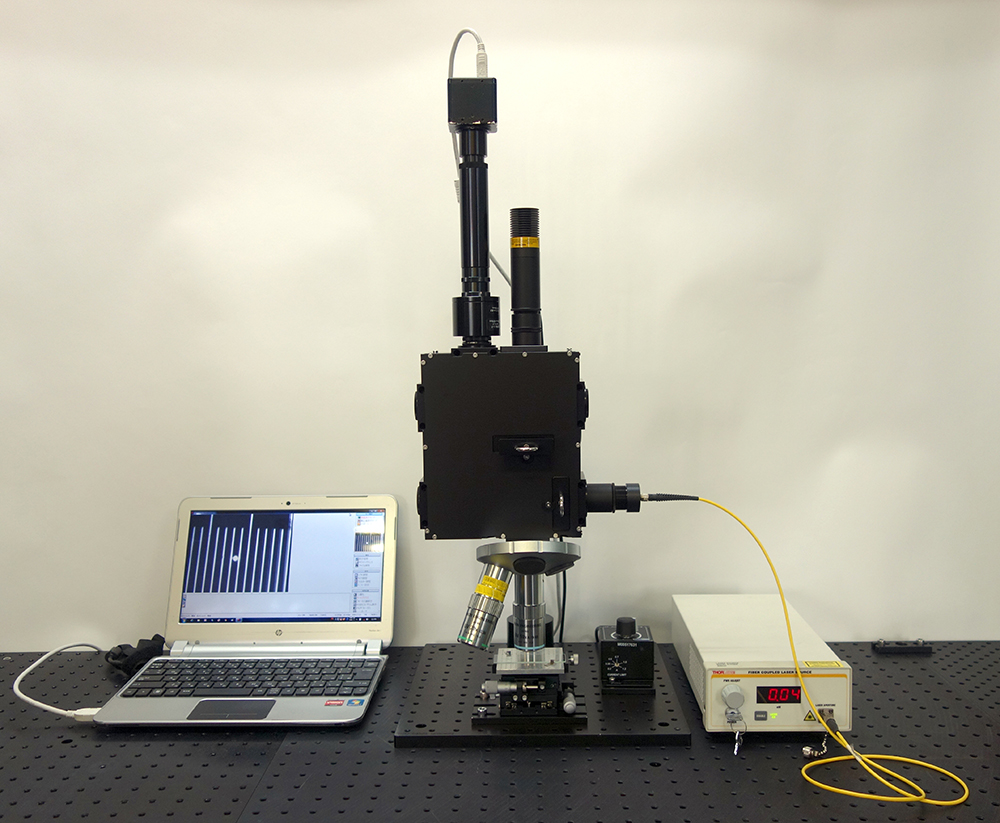
This system is a dedicated microscope unit designed to focus laser light precisely onto micro-areas of a sample. Its objective lens system enables stable, highly reproducible laser irradiation of micron-scale areas, and it supports laser sources across a broad wavelength range, including ultraviolet (UV), visible, and near-infrared (NIR). It is ideal for high-sensitivity thermophysical property measurements that require laser irradiation of small samples or localized areas, such as laser flash analysis with periodic heating (LFA-PH), laser flash analysis (LFA), photothermal radiometry (PTR), and photoacoustic (PA) methods. The microscope can also be used as a UV microscope or a near-infrared microscope, making it versatile across the field of optical analysis, including emission observation, absorption measurement, and surface inspection. It is a compact, high-performance optical platform at the core of optical control, from research and development to product evaluation. |
||||||||||
■Specifications |
||||||||||
|
||||||||||
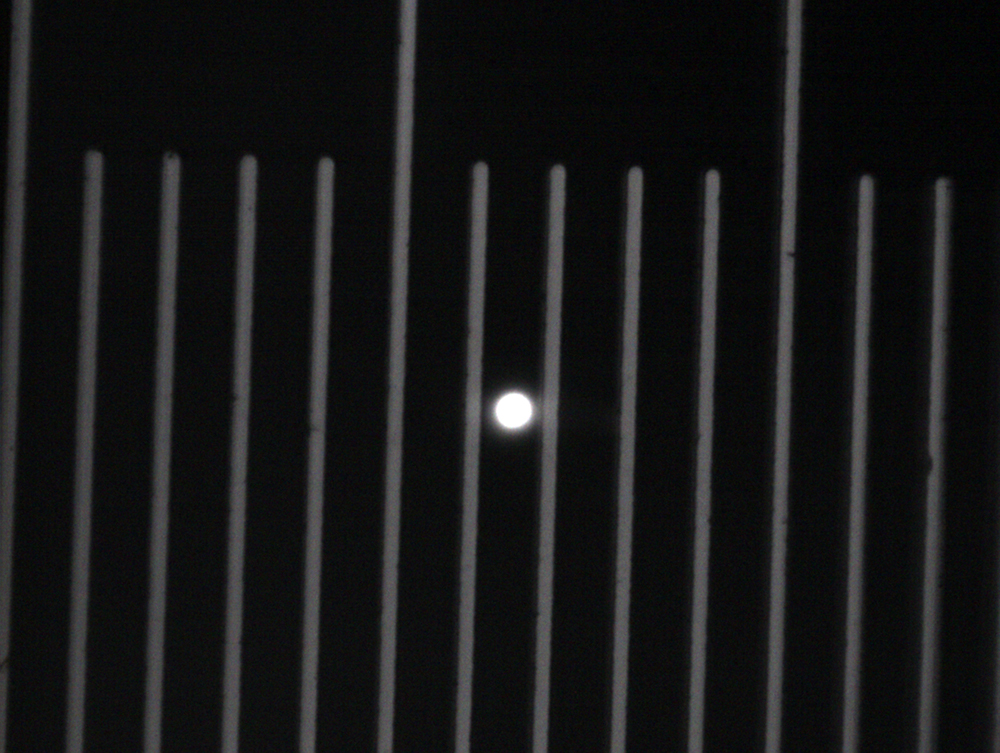
■Photo of the Irradiation Spot |
||||||||||
 |
||||||||||
| *Specifications and appearance are subject to change without notice for improvement. | ||||||||||
■Technology Overview |
||||||||||
|
● Laser Flash Analysis with Periodic Heating (LFA-PH) Laser flash analysis with periodic heating is a technique in which the sample surface is periodically heated by laser light modulated at high frequency, and the resulting thermal response is detected without contact by an infrared sensor. The temperature response obtained allows thermal diffusivity and thermal conductivity to be evaluated with high sensitivity and accuracy. The method is well suited to measuring low-thermal-conductivity materials, thin films, and small samples, and enables thermophysical property evaluation in frequency ranges that were difficult to access with conventional methods. |
||||||||||
|
● Laser Flash Analysis (LFA) Laser flash analysis is a non-contact method for measuring thermal diffusivity, in which one face of a sample is instantaneously heated with a short laser pulse and the temperature rise on the opposite face is monitored with a high-speed infrared detector. Thermal conductivity can be calculated from the thermal diffusivity, and measurements are possible for materials ranging from bulk materials to thin films over a wide temperature range. The method conforms to JIS and ASTM standards and is widely adopted in industry and research as a highly reliable technique for thermophysical property evaluation. |
||||||||||
|
● Photothermal Radiometry (PTR) Photothermal radiometry is a technique for evaluating thermophysical properties such as thermal diffusivity by detecting the thermal infrared radiation caused by temperature changes in a sample heated by a modulated light source. By detecting infrared radiation without contact, the heat conduction properties of fine structures, coating layers, and multilayer films can be analyzed with depth resolution. The method excels at non-destructive, non-contact thermal imaging and is used in materials development and quality control. |
||||||||||
|
● Photoacoustic Method (PA: Photoacoustic Spectroscopy / Photothermal Spectroscopy) The photoacoustic method is a technique for analyzing thermal and optical properties by using a microphone or piezoelectric element to detect acoustic waves (ultrasound) generated by thermal expansion caused by modulated light energy absorbed in the sample. It provides physical property information such as thermal diffusivity, absorption coefficient, and refractive index, and is particularly well suited to evaluating multilayer materials and materials with extremely low thermal conductivity. Non-contact measurement is also possible, and applications in materials evaluation and non-destructive testing are expanding. |
